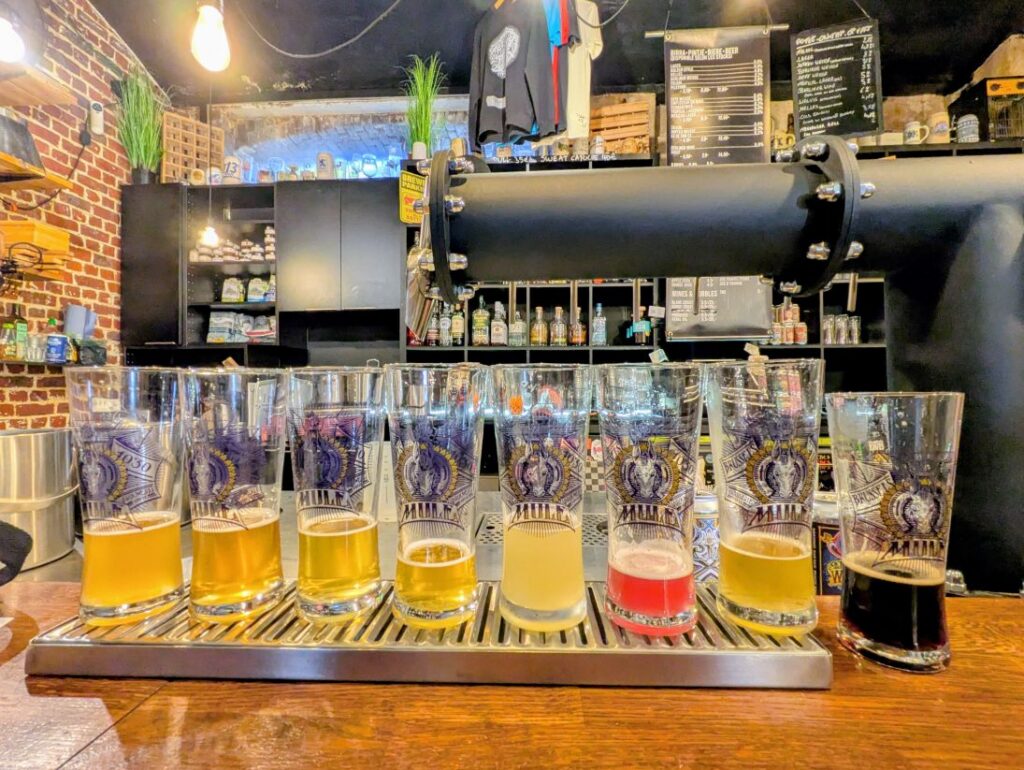
Yesterday I visited Brasserie de la Mule (donkey) in Schaerbeek, Brussels. It was not my first visit and although it was very pleasant, it was a work visit. Together with my colleagues from Once in Brussels we had a pleasant tour and tasting with the owner of the brewery. Joel told us all about his brewing project and had us taste a lot of his beers, while we took a loft of notes. The reason for this is quite exciting: as of January we will start hosting brewery tours here! Once in Brussels is setting everything up in the coming months and as of January 2027 you can have an exclusive looks behind the scenes at Brasserie de la Mule!
Brasserie Caulier, located in Peruwelz only 3 kilometers from the French border, celebrated their 30th anniversary this month with a lot of special festivities. I visited the brewery earlier this summer, when I also visited the nearby Caulier restaurant: Brasserie Atlas. This historic tavern serves delicious food and has all their beers as well.
The history of Brasserie Caulier goes back to 1933 when the first person in the Caulier family started as beer merchant on the French border. In 1980 Roger and Linda Caulier, third generation of the family, were at the head of the business, which was growing well. They took over a tannery, because they needed space. In the nineties they launched their Bon Secours beer brand and quickly decided to also start brewing it themselves. In 1996 their first beer was brewed.
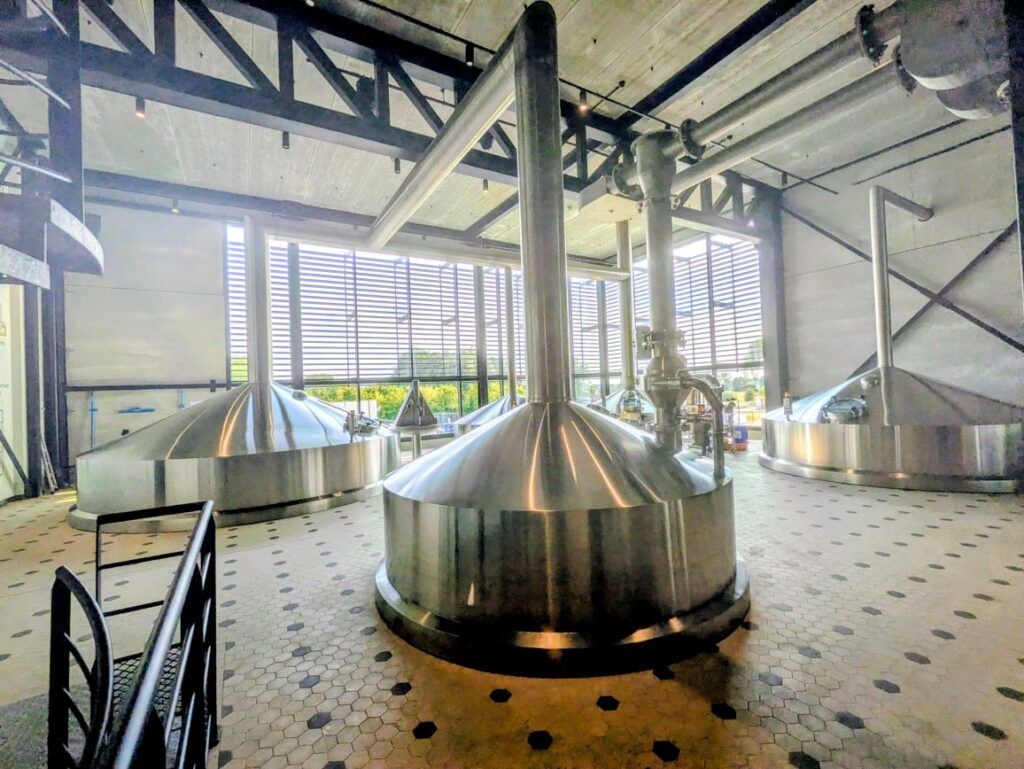
In 2012 their three sons Laurent, Bertrand and Vincent joined the business. This is also the year they started making the Paix Dieu abbey beer and first beers in the Stuut beer range. In 2017 the three brothers took over the daily management and started a big innovation project. In 2018 they installed a completely new brewing system to keep up with the rising demand.
October 2026 did not just mark the 30th anniversary of the brewery, but also was the finish line on a 9 year renovation and innovation plan. Investments were not only made in the new brewing systems, but also in solar panels (from 726 to 2000), water management and water treatment (usage of 5,12 liter water per beer to 1,5 liters) and many new fermentation tanks to be able to brew more often.
The new Brewery
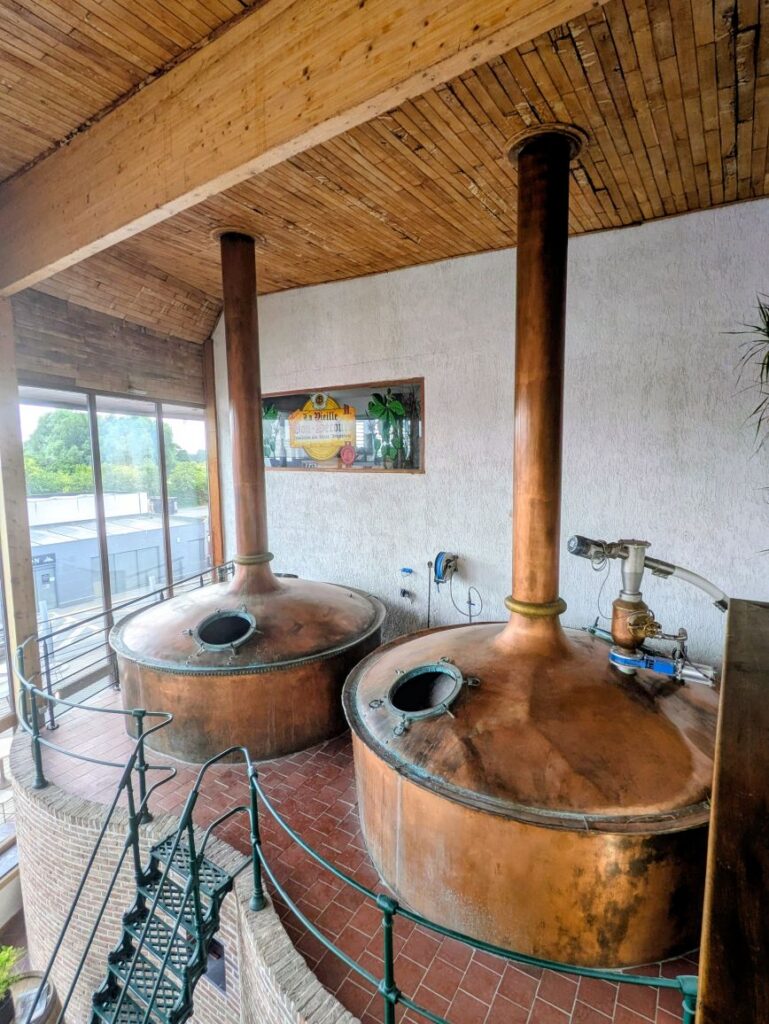
Currently they are brewing around 100.000 HL per year but Caulier now has the capacity to double or triple this. They employ around 90 people. The brewery wants to earn back the investment and hopes to export more. The main markets now are France, Belgium, the Netherlands and Spain. The old brewing equipment in copper is beautiful to see and still operational, but is rarely used anymore. The brewery has their own water source and has heavily invested in a water treatment station. This way they can reuse more water and need to pump up less water from the ground. In order to accomplish this, they bought up surrounding land, consisting of meadows and an old farm building. This old farm building was broken down in small pieces and used as a stabilizer in the ground for the new annex building. The new brewing system is fully automatic.
Rewenal Bon Secours range
This year the whole Bon Secours range was changed as well. New recipes to matching the new goals and vision of an innovating brewery. The brewery also works with several restaurants, les Maisons du Bon, to showcase their beers to a wider audience.
At the end of the tour we got to taste three beers, one from each of the three beer ranges the brewery has made. The brewery also has a shop, which opens from Wednesday to Saturday. Paix Dieu still remains my favourite but I was also quite impressed with the alcohol free beer (Zero Pression) that I took home from the shop.
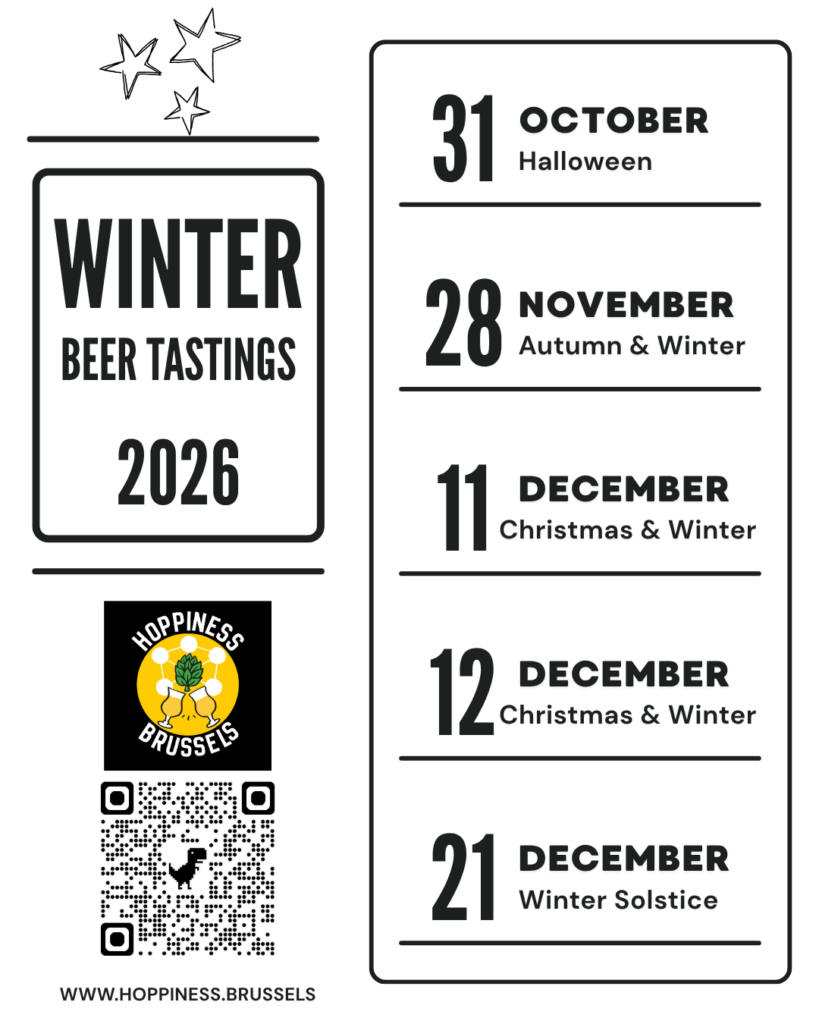
Bring your family, friends, neighbours and colleagues and join Carien for a delicious Winter Beer tasting. When it’s cold, dark and even wet ouside, winter beers will surely lift your spirit. Enjoy a special afternoon or evening in the cozy Hoppiness tasting room. You’ll get four winter beers with a delicious food pairing each. Carien will tell stories about the beers, the brewers and many other beer related fun facts. Towards the end of the tasting we will do an exciting quiz! The winner gets a prize to take home! This year we’ll have different themes to our tastings & tasting room
31 Oktober – Halloween edition
28 November – Autumn & Winter beers
11 & 12 December – Christmas & Winter beers
21 December – Winter Solstice & Christmas
And for all our winter beer tastings:
if you come dressed up in a costume, you’ll get an extra beer taster! 😀
Did you know we send out a monthly newsletter? Every month I write a personal newsletter about what I have been up to (beerwise…) and about (our) upcoming events.
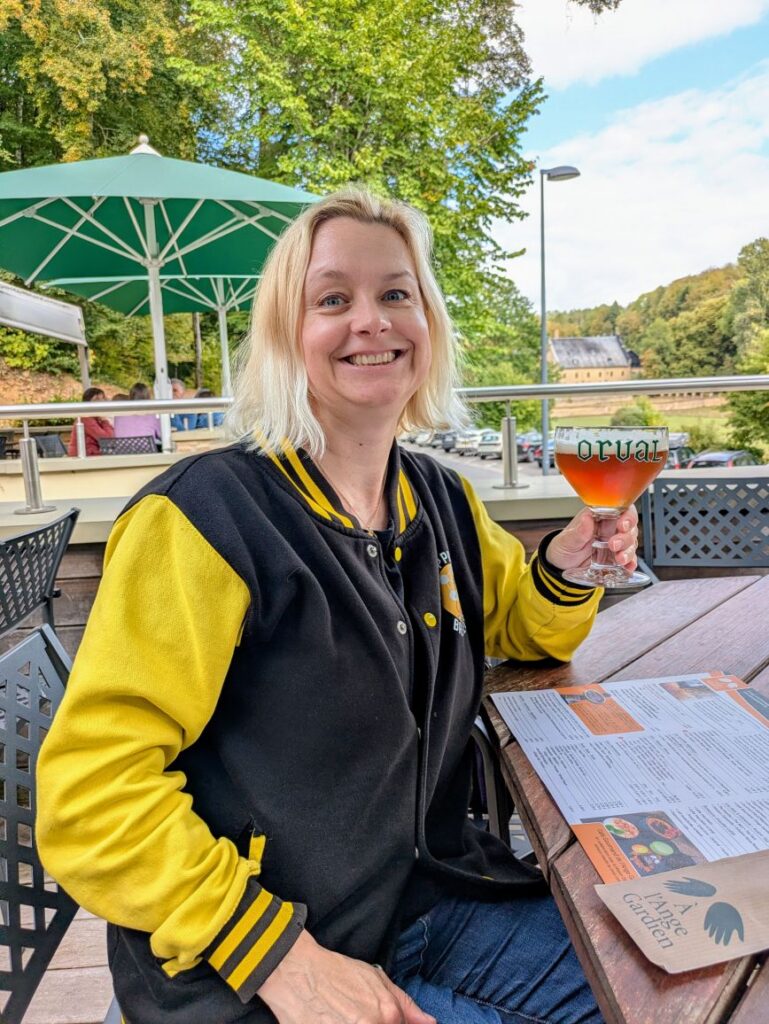
On Friday the 18th of September I managed to cross something of my (beer) bucket list. I visited the Open Brewery Days at Orval. This Trappist Monastery opens their brewery only once a year, always in September. It’s 190 kilometres away and at least two hours driving from Brussels, but it was definitely worth the trip. I thoroughly enjoyed walking past the copper brewing tanks and the rest of the installations, reading about the history of the beer and its recipe. Orval is one of my favourite beers and is often mentioned in my beer and brewery talks because of it’s special nature.
The Orval brewery was set up in 1931 in a time when they were rebuilding the monastery back up from its ruins. It was always intended as an activity to finance the monastery and not specifically as an activity for the monks, as they were already making bread and cheese. So Orval brew masters were and are always laymen.
When they started the brewing team used an unusual combination of production methods, such as infusion brewing and dry-hopping, especially for that time but even now. Orval beer is made with three different fermentations. After the first fermentation (top-fermentation with a house yeast), the young beer is transferred to big maturation tanks and kept at 15 degrees Celsius for 3 weeks. This is the moment where hops are added (dry hopping) and the wild yeast (their house strain of Brettanomyces). They have dozens of 10.000 litre tanks that we walked past during the brewery tour. After bottling the beer is refermented in the bottle for around 4 weeks at a temperature of 17 degrees Celsius. Only after that the beer is ready to go to the customers. And as all Orval-lovers know, from there the beer will continue to evolve.
After the tour we went to the nearby tavern A l’ange gardien, where we had a nice lunch and I drank my first green Orval ever. Green Orval is an Orval without the addition of wild yeast (Brettanomyces). It tastes like an IPA, because the strong dry hopping that is used on Orval now determines the flavour. Even without the brewery, the Orval Abbey is worth a visit and the nearby tavern is open every day, except Wednesdays. I have made a video of my visit and you can see it here on Instagram.
The next Open Brewery Days at Orval are already scheduled: 17 & 18 September 2027. Registration will open in May 2027. Click here for more information: https://www.orval.be/en/page/501-open-days
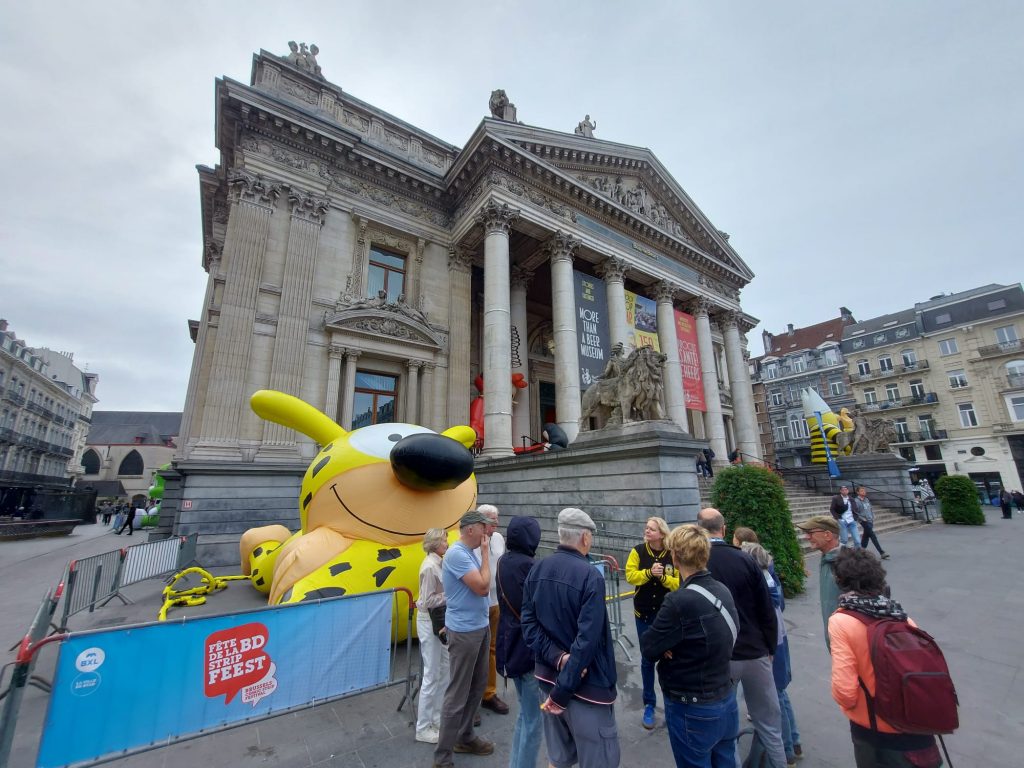
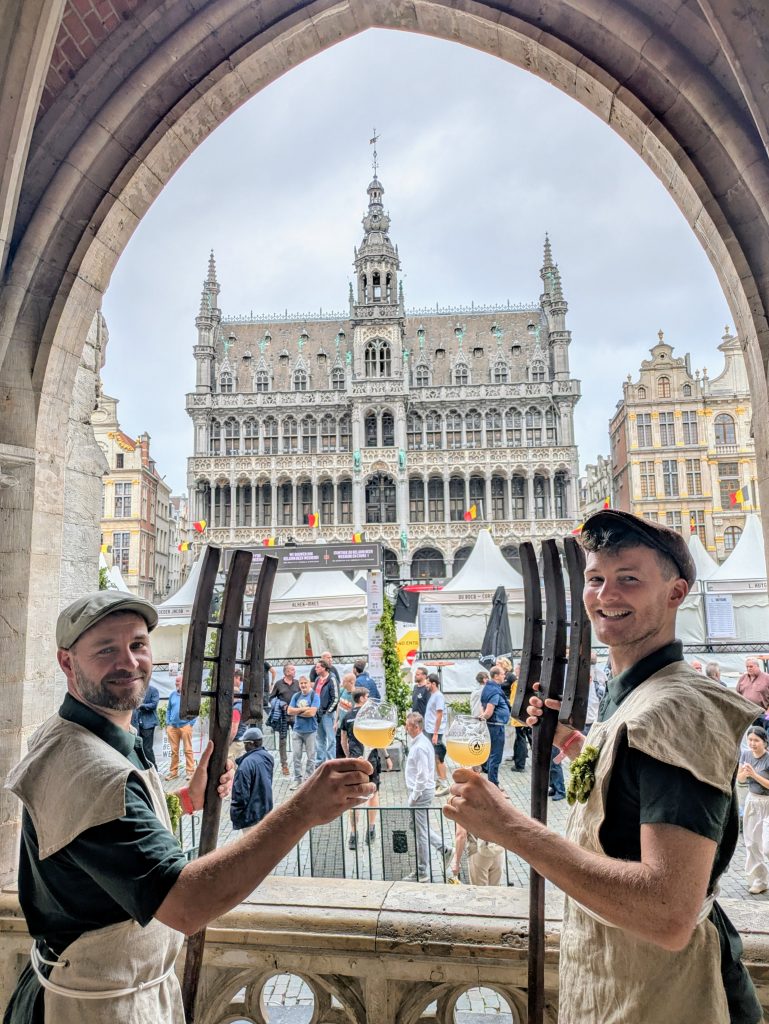
This weekend it was the Brussels Heritage Days. Many events, walks and visits were organised in this years theme: Our landscape, our legacy. My amazing colleague Helene and I did several group walks in downtown Brussels around the rich heritage of beer, hosted by Once in Brussels. We put beer in the spotlight as both Belgian and Brussels heritage. During our walks traces of the city’s brewing past and present appeared at every turn. Industrial buildings, street names, cafés, meeting places and hotels. It was really nice to show our groups all these places linked to our Unesco recognised Belgian Beer Culture.
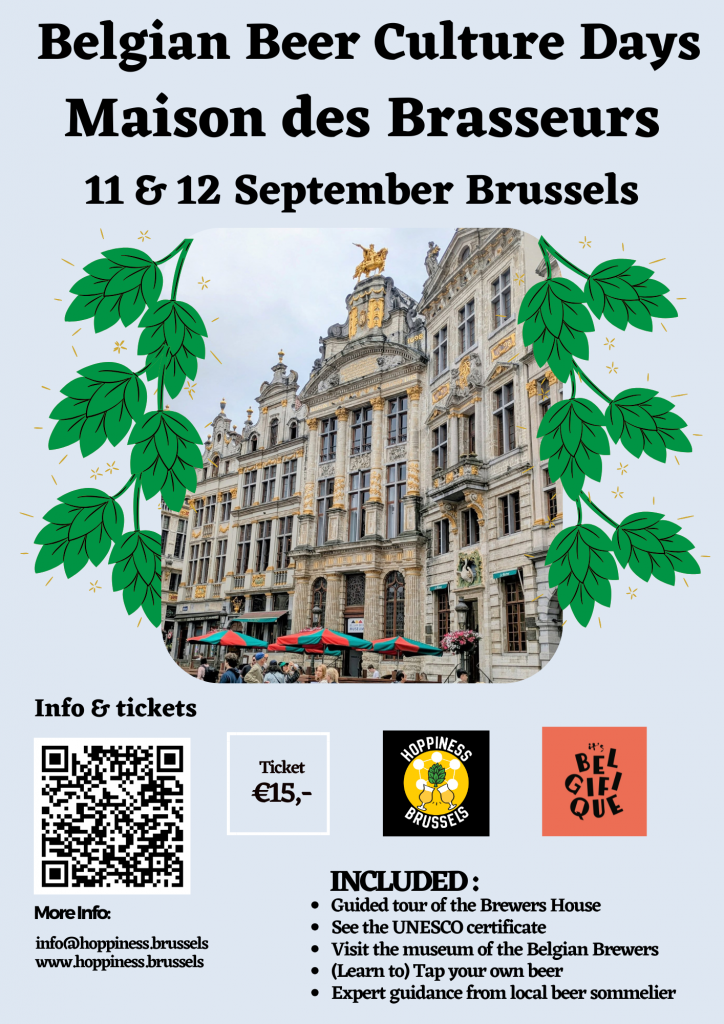
— Special tour for the Belgian Beer Culture Days 2026 —-
This year the Belgian Brewers celebrate that it’s 10 years ago that UNESCO recognized our entire beer culture as “Living Heritage”. This unique status doesn’t protect some dusty piece of history, but a vibrant tradition that is experienced, shared, and passed down anew every day.
Celebrations started with the always epic Belgian Beer Weekend on the Grand Place but festivities continue at the Belgian Beer Culture Bar at the Bourse all week.
Specially for you, we’re organising an exclusive tour at the impressive Maison des Brasseurs on the Grand Place, build in 1698 for the Brussels Brewers Guild.
Book your ticket now and don’t miss the opportunity to see what it looks like on the inside and see the UNESCO certificate with your own eyes.
Belgian Beer Weekend 2026🍻 at the Grand Place of Brussels It started a little wet on Friday but it got quite cozy with 30 people under one umbrella😅 Shared a beer with many lovely people but also managed to not find just as many 🤪 Hope to catch you next year!
Belgium Beer Week 2026 has just started. This co-creation event celebrates Belgian beer culture, a UNESCO recognised intangible cultural heritage of humankind. Bars, brewers and beer guides around the world can register their events at www.belgiumbeerweek.be The week runs from Monday 24th of August till Sunday the 30th of August. Belgium Beer Week is organised by the Beer Idiots.
At Hoppiness Brussels we will host a Tour and Tasting at Maison des Brasseurs and a Beer History Workshop. More information and tickets can be found on Billetweb: https://www.billetweb.fr/multi_event.php?user=186058
Posted inevents, news|Comments Off on Belgium Beer Week 2026 has started
Tasting Chibuku Umqombothi – Cape Town South Africa (Woodstock brewery)
One more post about my time in Cape Town for the African Beer Cup During one of our brewery visits with the group of judges we got to taste Umqombothi.
Fellow judge Apiwe Nxusani-Mawela (Tolokazi brewing) had brought us some Chibuku, a commercial version of this traditional South African beer. This type of beer is made from corn, corn malt, sorghum malt, yeast and water. It is quite low in alcohol (less than 3% normally). It is traditionally brewed by women, for which they actually distance themselves from the rest of the village during the whole brewing process.
This beer has probably been made for thousands of years and is brewed in each tribe/ village according to a recipe that has been passed down for generations. Apiwe is actively trying to keep this traditional beer and the traditions surrounding it alive by organizing talks, masterclasses and brewing competitions. Beer heritage like this is important to keep alive for future generations.
Now for the tasting. As you can see in the photo Umqombothi looks nothing like any modern beer at all. The beer looks grey-white and milk-like and has a heavy and quite sour aroma. The mouth feel is quite thick, creamy and even a little gritty, reminding me a bit of slightly sour thin yogurt, followed by some grainy, corn-like flavours and a little fruitiness. Surprising for sure, but also refreshing and after a few sips to get used to it, I definitely enjoyed it. For me it was very special to taste such a different beer and to learn about its heritage.
A must-try when you visit South-Africa. I surely will try to find some more Umqombothi on my next visit to Cape Town.
Hoppiness is all about good craft beer and having a good time. Brussels and Belgium have amazing breweries and we’d like to share our best beer discoveries with you so you can experience Belgian beer culture in the best way possible.
Hibiscus pale ale (6%) brewed by Tale Beer Brewery in Nsawam Adoagyiri (Ghana).
This beer is brewed in Africa with African ingrediënts like rice and sonio and in the case of this beer, hibiscus 🌺
The result is a tasty ale, golden in colour with a red shimmer. The base is grainy but also has a nice flowery taste and aroma. The hibiscus is mild and a great and surprising addition. Like!
Triple Abbaye de Lys (8.5%) brewed by Brasserie Goudale in Arques (Northern France).
A typical Belgian style blonde beer. Brewed with four grains, orange and coriander. It has a malty body, sweet and alcoholic, but also grainy and the coriander gives it quite a spicy aftertaste.
The Abbey de Lys has been in ruins for many years but is a protected monument. It can be found near Paris. The fleur-de-lis is also known as the French lily symbol.
Indira Blonde ipa (6%) brewed by The Muttermilch Vienna Brewery in Vienna (Austria).
A rich ipa, both in aroma and taste. Tropical notes, a good malty body and a bitter and fruity finish. Yum!
The Muttermilch Vienna Brewery is located in the basement of the BeerLovers Craftbeer Store in Vienna. The name ‘Muttermilch’ (Mother's Milk) means the highest quality for the brewery and stands as a symbol for mental and physical nourishment.
A big thankyou to my Viennese friend A who gifted me this tasty beer!
Hallertau pils (5.2%) brewed by Human Robot in Philadelphia (USA).
This well made pilsener has a full malty body and a crisp and slightly bitter finish.
Information from the brewery:
This beer is brewed as an ode to the industrial German pilsners of the 50’s to the late 70’s when technology allowed more efficient processes, but the liquid was still brewed “the old way”. They have used a double decoction mash, 100% German Pilsner malt, and 100% German Hallertau Mittlefru hops.
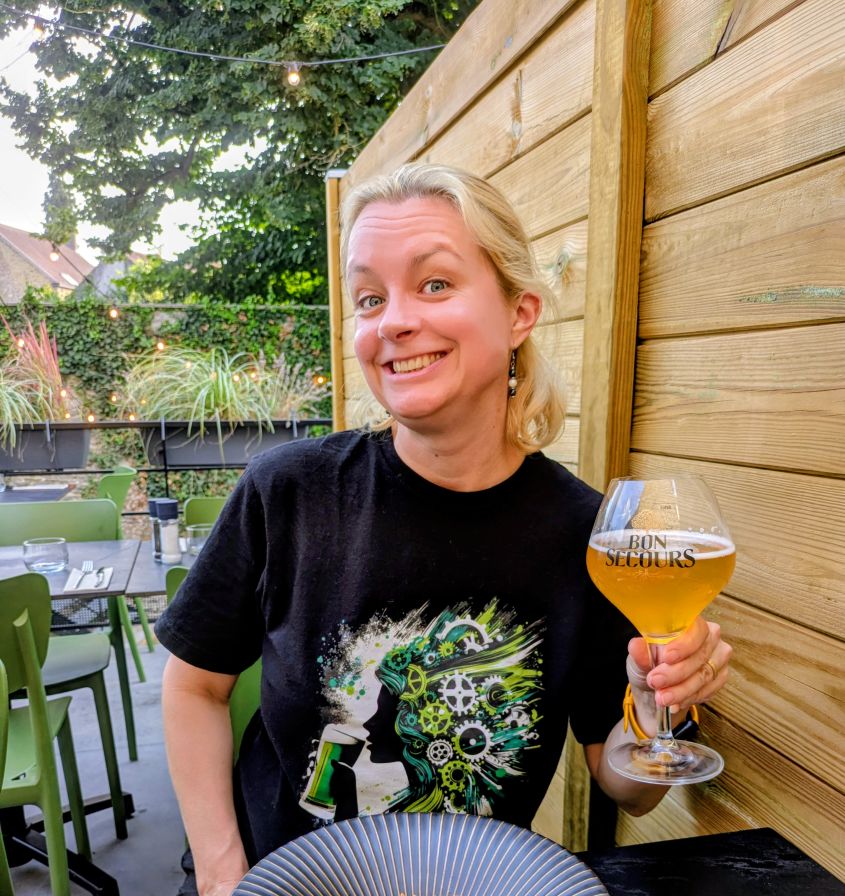
This summer I visited Brasserie Caulier, the brewer of the Paix Dieu, Bon Secours and Stuut beers. This month the brewery celebrates their 30th anniversary so definitely the right moment to (finally😅) post my pictures of this visit. You can also read my article about the brewery on my website: www.hoppiness.brussels
Winter Ale (10%) brewed by Circus Brouwerij in Zwevegem (Belgium)
This strong dark ale is very rich in spicyness in both aroma and taste. Notes of cinnamon dominate but in the aftertaste it's more like gingerbread. Together with a strong and sweet malty and alcoholic body, it makes for a great beer for a stormy night like we have now in Brussels. Cheers!🍁
BZART Lambiek millesime (7.5%) made by Oud Beersel in Beersel (Belgium).
For this special beer Oud Beersel bottles their lambic with the addition of a ‘liqueur de tirage’, which consists of sparkling wine yeast and sugar for secondary fermentation. It then matures for at least nine months in the bottle before being finished according to the ‘Méthode Traditionnelle'.
This enjoyable brut lambic has a pleasant wild yeast aroma and a refreshing lambic flavour. The carbonisation is quite strong but it also gives the beer a nice and full body.
Hefe Weissbier (5.4%) brewed by Bay. Staatsbrauerei Weihenstephaner in Freising (Germany)
You can't go wrong with this beer from the oldest brewery in the world! Their story started nearly a thousand years ago, in 1040.
This wheat beer has yeasty aromas like clove and banana, a beautiful head of foam and a rich and grainy body. Prost!
Juicy neipa (5.7%) brewed by Loncium brewery in Mauthen (Austria).
A well made beer with a lovely aroma of pineapple and mango. The mouthfeel is juicy and creamy, it has a proper bitterness and a lot of fruity hoppy flavours. The can is nicely decorated with a variety of cartoon characters.
Loncium is the ancient Celtic name for the village of Mauthen.
#loncium #beerstagram #instabeer #ipalovers #neipa
Dubbel (6%) brewed by Brouwerij Fort Lapin in Brugge (Belgium).
This well made brown ale has a nice aroma of roasted malts. The taste is semi-sweet, with notes of toasted bread, syrup, roasted grains and a hint of red fruit.
Stonehenge lager (4.3%) brewed by Stone Daisy Brewery in Salisbury, Wiltshire (UK).
Visited Stonehenge this summer and brought back this beer as a souvenir. It's a golden lager made from 5 different malts resulting in a lovely biscuity flavour, the hops give it a crisp freshness with some floral notes. Definitely a nice souvenir😊

 During one of our brewery visits with the group of judges we got to taste Umqombothi.


